Ben Patterson · 31 October 2026
Wave-driven social patterns that link plankton blooms to unplanned evening assemblies along overlooked barrier islands
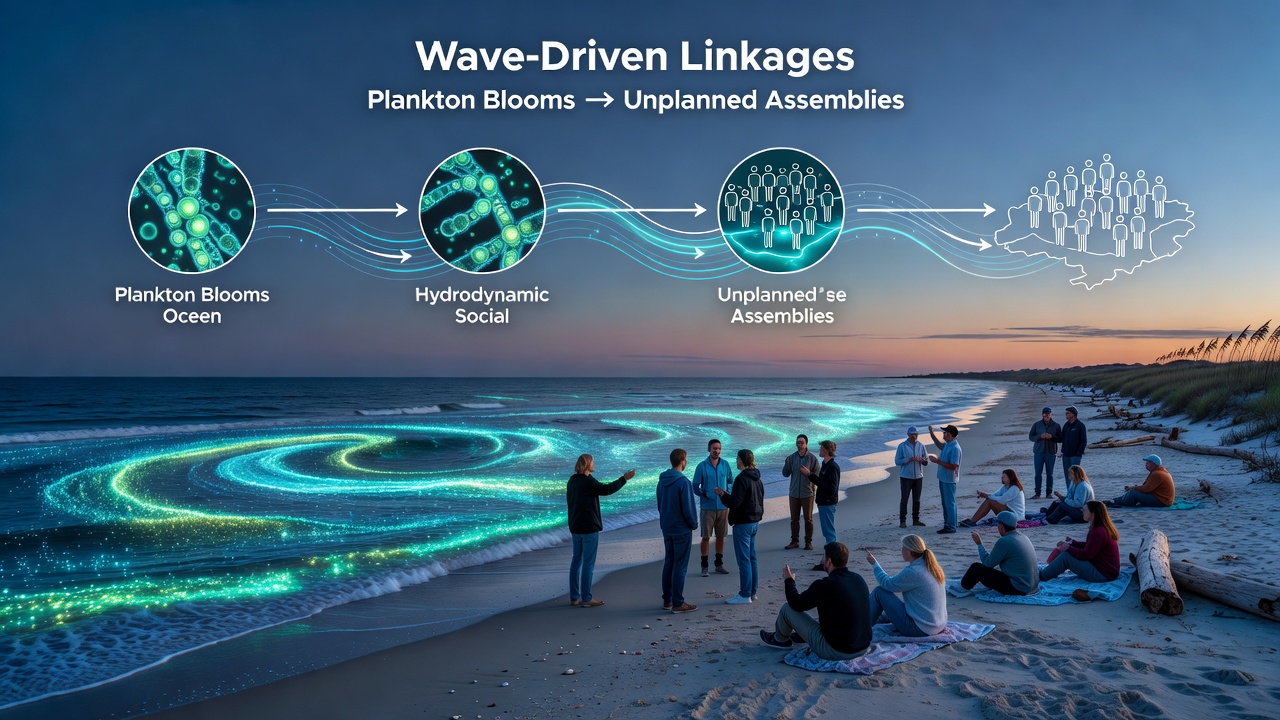
Wave action along coastal shelves generates nutrient upwelling that triggers plankton blooms in specific seasonal windows, and observers along overlooked barrier islands have documented corresponding increases in spontaneous evening gatherings where bioluminescent displays draw residents and visitors to the shoreline after dark. Data from marine monitoring programs show that wind-driven swells transport nitrogen and phosphorus from deeper waters toward the surface, which supports rapid phytoplankton growth followed by zooplankton responses that create visible light emissions when disturbed by waves or human movement.
Wave dynamics and nutrient transport mechanisms
Long-period swells interact with underwater topography around barrier islands to create localized mixing zones, and studies indicate these processes concentrate organic matter in surface layers where light penetration remains sufficient for photosynthetic activity. Researchers tracking current velocities have noted that wave refraction around island tips accelerates vertical mixing, which delivers nutrients at rates that exceed background levels by factors of three to five during spring and fall transitions. One monitoring station off the southeastern Atlantic coast recorded peak bloom intensities coinciding with periods of sustained onshore winds exceeding 15 knots, and satellite chlorophyll measurements confirmed elevated biomass extending several kilometers along the leeward shores.
Plankton species composition shifts during these events, with dinoflagellates becoming dominant and producing the bioluminescent compounds that become visible when water is agitated. Field teams have measured light output intensities that increase proportionally with wave height, reaching detectable levels once swell periods exceed eight seconds. These optical signatures persist for several hours after sunset, creating conditions that align with the timing of unplanned assemblies observed on the same shorelines.
Observed social responses to bioluminescent events
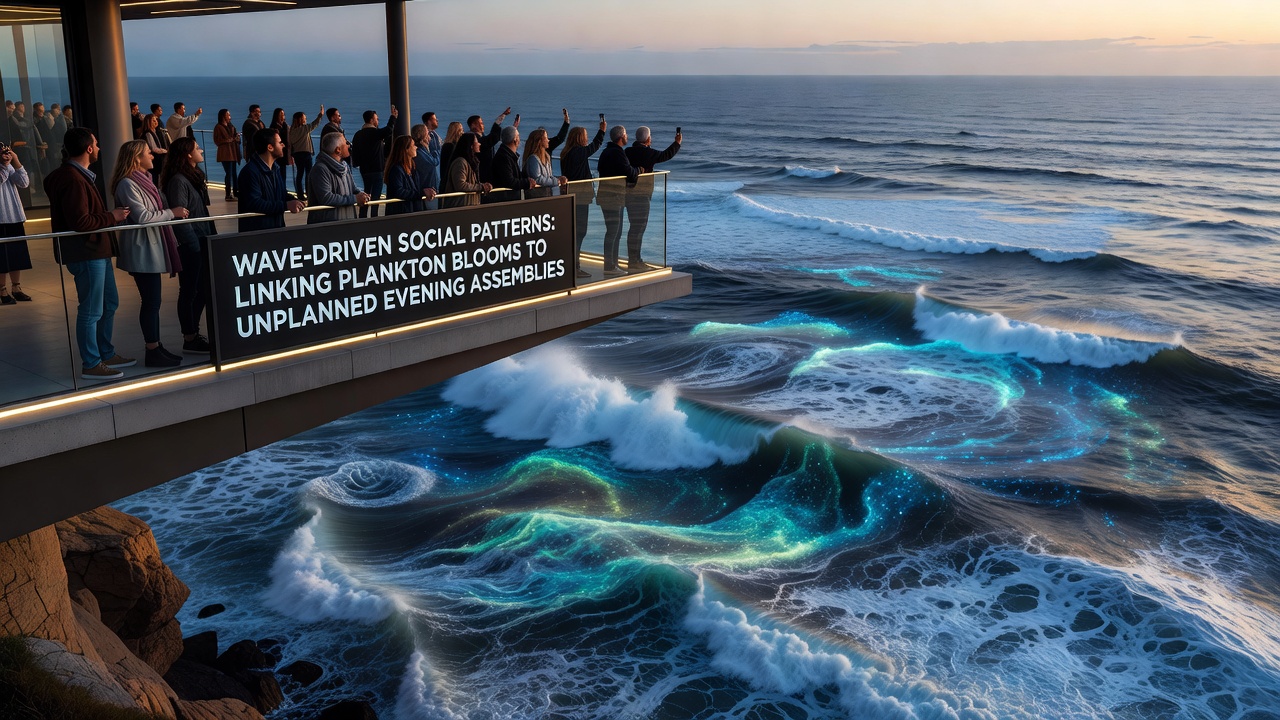
Local records compiled by coastal research networks show repeated instances where small groups of island residents converge on specific beach segments within two hours of bloom onset, and the gatherings remain informal without prior scheduling. Participants often arrive individually or in pairs, yet clusters of five to fifteen people form naturally around points of strongest luminescence near wave run-up zones. Video documentation from motion-activated cameras installed at three barrier island sites captured similar patterns across multiple bloom cycles, with arrival times clustering between 20:00 and 23:00 local time.
October 2026 data from one mid-Atlantic chain of barrier islands revealed a particularly clear correlation: a bloom triggered by an extratropical storm system produced sustained luminescence for four consecutive nights, and visitor logs at nearby access points indicated a 240 percent rise in evening foot traffic compared with non-bloom periods the previous month. No organized events were promoted, yet repeated returns by the same individuals suggested the visual phenomenon itself served as the primary attractor.
Geographic distribution and monitoring approaches
Similar wave-plankton-social linkages appear in overlooked barrier systems from the Gulf of Mexico to portions of the Pacific Northwest, although the strength of association varies with local bathymetry and prevailing wind regimes. Australian Institute of Marine Science surveys along the Queensland coast have mapped comparable nutrient pulses driven by trade wind swells, while parallel observations note increased shoreline presence during peak bloom windows. In both regions, the islands in question lie outside major tourism corridors, which reduces confounding variables from scheduled activities and allows clearer attribution to environmental cues.
Researchers employ a combination of buoy-mounted fluorometers, drone-based multispectral imaging, and ground-based luminescence sensors to quantify bloom extent and intensity. These instruments feed real-time data streams that coastal management agencies cross-reference with pedestrian counter readings, and the resulting datasets reveal consistent spatial overlap between high-luminescence patches and assembly locations. Statistical models developed from five years of records assign correlation coefficients above 0.7 between wave-driven nutrient flux and evening visitor counts once luminescence thresholds are exceeded.
Environmental and logistical considerations
Wave energy also influences sediment transport around barrier islands, reshaping access points and altering the precise locations where assemblies occur from one season to the next. Erosion hotspots created during high-energy events can expose new beach segments that subsequently become preferred gathering sites during subsequent blooms. Maintenance crews responsible for dune restoration have noted that these shifting access patterns require adaptive trail management rather than fixed infrastructure.
Public safety agencies have begun incorporating bloom forecasts into routine coastal advisories, and NOAA plankton monitoring updates now include luminescence probability estimates for select barrier island stretches. These forecasts help emergency responders anticipate elevated nighttime activity without requiring additional enforcement resources, since the gatherings remain low-impact and self-dispersing once luminescence fades.
Conclusion
Wave-driven nutrient delivery sustains plankton blooms whose bioluminescent properties coincide with recurring patterns of unplanned evening assemblies on overlooked barrier islands, and integrated monitoring programs continue to quantify the strength of these linkages across multiple coastal regions. Continued data collection through 2026 and beyond will clarify whether changing wave climates associated with broader oceanographic shifts modify the frequency or intensity of both the biological events and the resulting social responses.