
Leon Frank · 5 September 2026
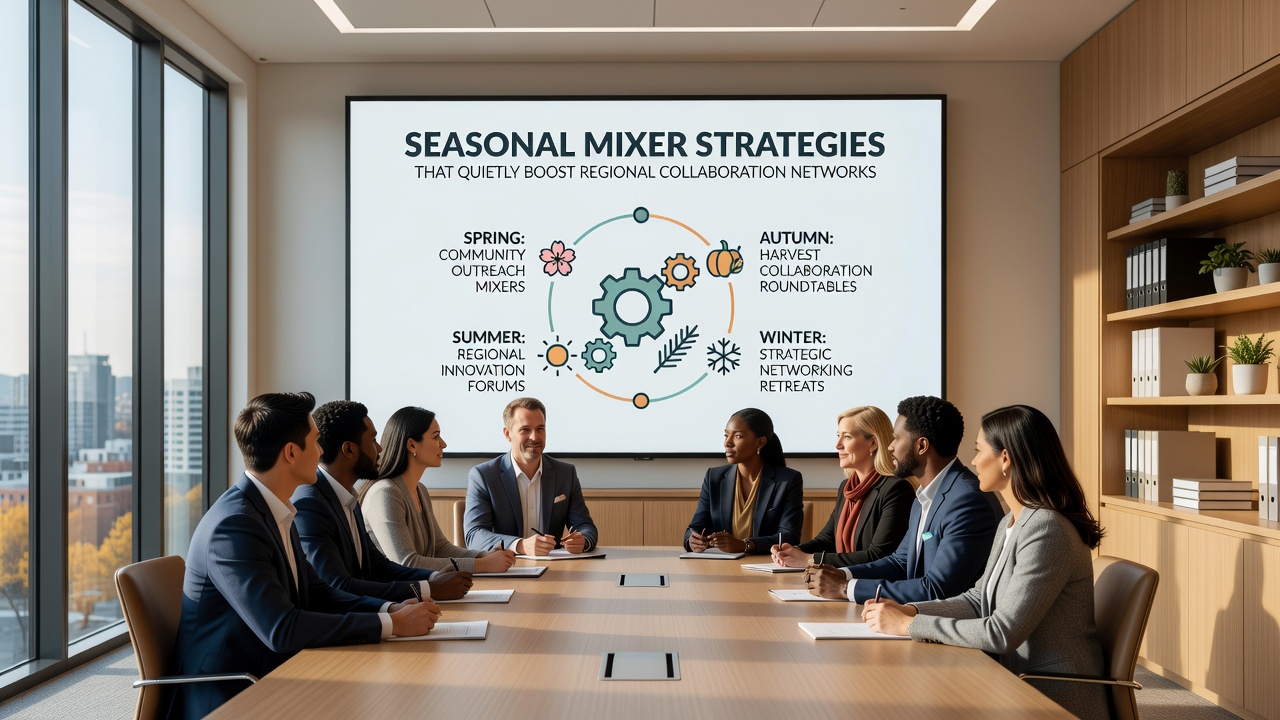
Seasonal Mixer Strategies That Quietly Boost Regional Collaboration Networks
Regional collaboration networks often develop through structured events that align with changing seasons, and data from multiple studies indicate these gatherings produce measurable increases in cross-sector partnerships when organizers apply targeted strategies. Researchers have tracked participation patterns across North America and Europe, finding that events timed to local economic cycles tend to draw higher attendance from businesses, nonprofits, and government agencies alike. Figures released by the OECD in its regional development reports show collaboration indicators rising in areas that host recurring mixers during shoulder seasons rather than peak tourist periods.
One approach involves mapping stakeholder calendars against weather and harvest schedules so that invitations reach decision makers when their operational demands are lower. This method allows planners to secure venues at reduced rates while participants arrive with fewer scheduling conflicts. Evidence from Canadian regional economic analyses demonstrates that such timing adjustments correlate with longer follow-up meetings and joint project proposals submitted within six months of the event.
Aligning Mixer Formats wth Local Industry Rhythms
Organizers who study sector-specific peaks and troughs can design mixer activities that match the natural workflow of dominant industries in each region. For manufacturing hubs this might mean scheduling roundtable discussions after quarterly reporting deadlines, whereas agricultural zones benefit from events held between planting and harvest windows. Data collected by Statistics Canada on inter-organizational partnerships reveal that attendance at these synchronized gatherings leads to sustained information exchange across municipal boundaries.
Interactive formats such as small-group problem-solving sessions replace traditional keynote speeches in many successful programs, because attendees report higher rates of direct contact information sharing when they work through shared challenges together. These sessions often incorporate brief presentations of anonymized regional data so participants leave with concrete talking points for future conversations. Observers tracking outcomes in Australian regional development projects note that this data-driven element increases the likelihood of multi-year memoranda of understanding between organizations that first met at seasonal mixers.
September 2026 Planning Cycles and Emerging Patterns
Planning documents circulated among regional economic agencies indicate that September 2026 will see expanded use of hybrid mixer models combining in-person attendance with live data dashboards accessible to remote partners. These platforms allow organizations in neighboring jurisdictions to monitor discussion themes in real time and prepare targeted follow-up messages. Reports compiled by the U.S. Economic Development Administration highlight several pilot programs where such integration produced documented rises in cross-border supply chain agreements during the subsequent fiscal quarter.
Venue selection strategies now emphasize accessibility via public transit and regional rail lines, because mobility data show higher repeat attendance when travel friction is minimized. Lighting and acoustics receive equal attention since studies on participant retention link comfortable environments to extended networking periods after formal programming concludes. Those who have examined attendance logs across multiple seasons find that venues with flexible breakout spaces support the formation of impromptu working groups that continue meeting for months afterward.
Follow-up protocols represent another quiet lever that sustains momentum beyond the single evening. Organizers who distribute digital summaries within 48 hours and schedule optional virtual check-ins at 30-day intervals record higher rates of realized partnerships according to internal evaluations shared by several European regional councils. These communications focus on action items rather than social recaps, which keeps the emphasis on measurable outcomes.
Budget allocation patterns also matter. Programs that reserve a portion of funds for micro-grants awarded to ideas generated during the mixer itself see increased proposal submissions from smaller organizations that might otherwise lack seed resources. Figures tracked in municipal innovation reports from various Canadian provinces show these micro-grants frequently evolve into larger joint applications for provincial or federal support within the following calendar year.
Measuring Network Growth Over Multiple Seasons
Longitudinal tracking reveals that regions maintaining consistent seasonal mixer series experience compounding effects in their collaboration metrics. Network analysis conducted by academic teams at several European universities demonstrates that organizations participating in at least three consecutive seasonal events form denser connection clusters than those attending sporadically. Edge density and betweenness centrality scores improve steadily, indicating more pathways for information and resource flow across the network.
Demographic diversity within attendee lists contributes to this density. Programs that intentionally rotate invitation lists to include emerging enterprises alongside established institutions record broader representation in subsequent joint ventures. Government statistical agencies in Australia have published aggregate figures showing elevated innovation output in regions where seasonal mixers maintain such rotation practices over five-year periods.
Conclusion
Seasonal mixer strategies that emphasize calendar alignment, format adaptation, structured follow-up, and modest resource allocation produce documented expansions in regional collaboration networks. The patterns observed across multiple jurisdictions suggest these approaches operate most effectively when repeated and refined over successive seasons. Organizations monitoring outcomes through standardized metrics continue to refine timing, venue, and engagement methods in preparation for cycles that include September 2026. Continued collection of participation and partnership data will clarify which combinations yield the most durable network effects across different regional contexts.