Logan Schmid · 17 October 2026
How Seabird Migration Routes Connect with Unplanned Coastal Meetups in Remote Inlets
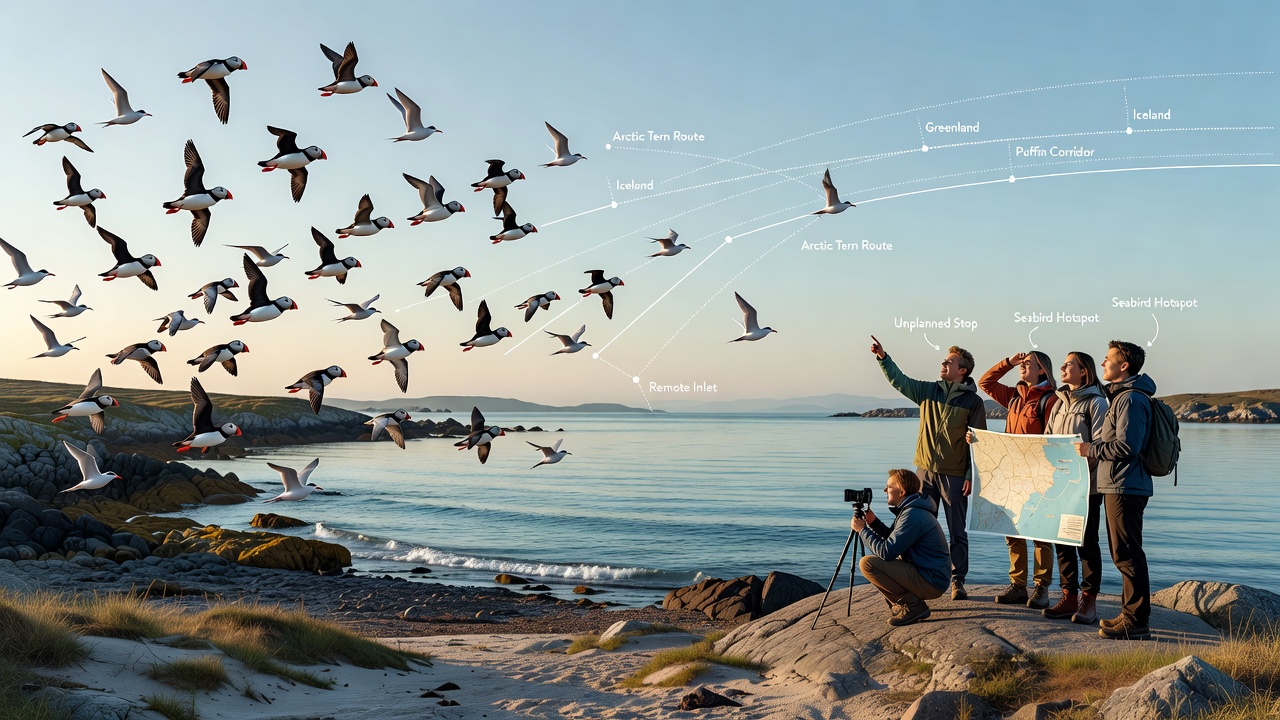
Seabird migration routes often follow predictable corridors that bring large flocks into contact with sheltered inlets along coastlines, and these patterns create opportunities for spontaneous gatherings where observers document arrivals and departures in real time, according to tracking data compiled by multiple research programs. Species such as sooty shearwaters and northern fulmars travel thousands of kilometers each year between breeding colonies and wintering grounds, and their paths frequently converge on narrow coastal passages that offer protection from open-ocean winds, which draws both professional biologists and local residents to the same locations without prior coordination.
Studies using satellite tags have mapped these routes across the Pacific and Atlantic basins, revealing that certain inlets serve as consistent stopover points where birds rest and feed during peak movement periods, while data from the U.S. Geological Survey shows that timing aligns with seasonal wind shifts that concentrate prey near shorelines. In remote areas of Alaska and British Columbia, for example, researchers have recorded sudden increases in human presence coinciding with these arrivals, as word spreads informally through community networks rather than scheduled events.
Migration Timing and Geographic Overlaps
October 2026 marked a notable surge in sightings along the northern California coast, where electronic tracking records indicated that thousands of birds paused in small inlets near Point Reyes, and similar concentrations appeared in comparable sites in New Zealand and Tasmania during the same window, according to reports from the Australian Department of Climate Change, Energy, the Environment and Water. These overlaps occur because prevailing currents and wind patterns funnel birds toward protected waters, creating natural congregation zones that humans also frequent for fishing, kayaking, or quiet observation, resulting in unplanned meetups where information about bird numbers and behaviors gets shared on the spot.
Remote inlets along the coasts of Norway and Newfoundland exhibit parallel dynamics, with fulmar routes intersecting areas that experience limited road access yet attract visitors through local radio announcements or social media posts once the first birds appear. Tracking studies indicate that stopover duration averages between two and five days, during which time the density of both birds and people rises sharply before the flocks continue southward or westward, leaving the inlets quiet again until the next seasonal pulse.
Observational Networks and Data Collection
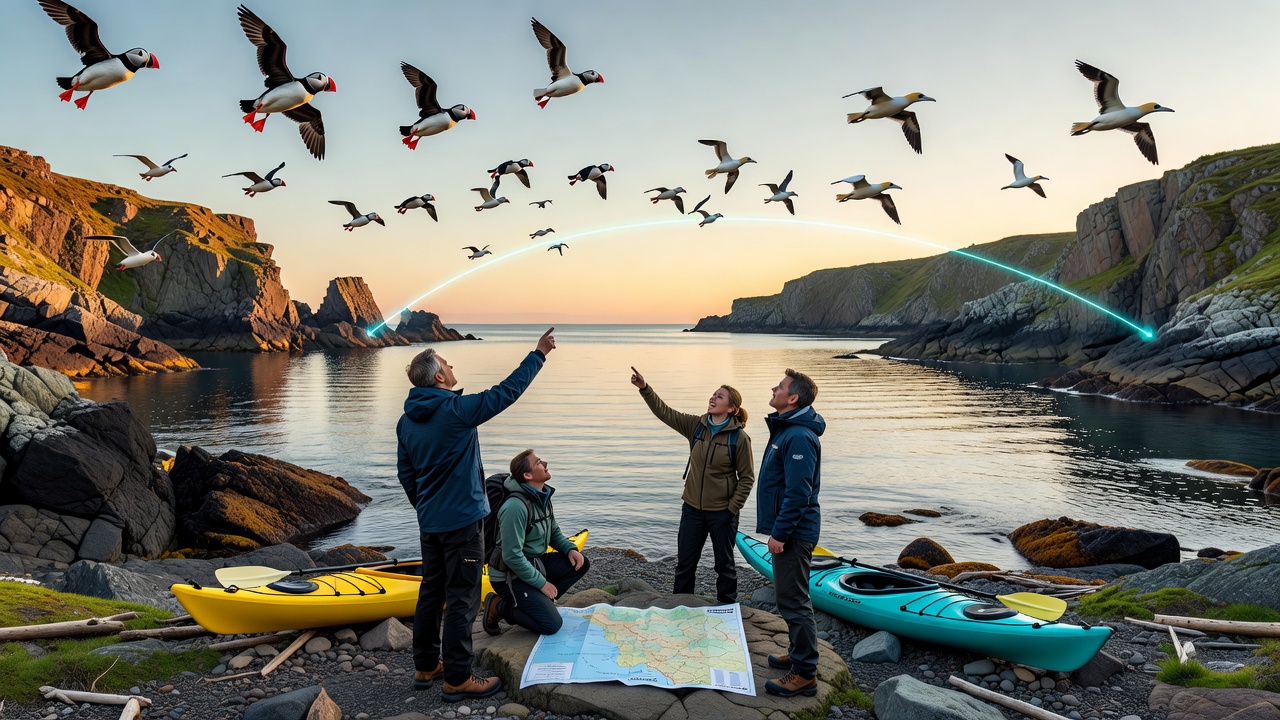
Local observers often form temporary clusters around high vantage points during these periods, sharing binoculars and notebooks while recording counts that later feed into larger databases maintained by organizations such as BirdLife International, and the resulting records help refine models of migration corridors that connect distant breeding sites with winter feeding grounds. In one documented case near the Queen Charlotte Islands, a cluster of fishers and visiting naturalists compiled joint observations over several evenings in late October, producing counts that matched satellite-derived estimates and highlighted how informal exchanges accelerate data gathering without formal organization.
Geographic information systems maintained by Environment and Climate Change Canada illustrate that these inlets lie at intersections of multiple flyways, increasing the likelihood that separate groups arrive independently yet converge on the same shoreline stretches, and the resulting exchanges of notes and photographs contribute to community-level understanding of annual variations driven by ocean temperature anomalies. Such patterns repeat across hemispheres because the underlying drivers, including food availability and weather systems, remain consistent year after year.
Conclusion
Seabird migration corridors that pass through remote inlets generate recurring conditions for unplanned coastal gatherings, as documented through satellite tracking, field counts, and regional environmental agency reports, and these intersections continue to supply valuable observations that refine scientific understanding of long-distance movement patterns across ocean basins. The alignment of bird arrivals with accessible shoreline locations sustains the cycle of spontaneous meetups each migration season.