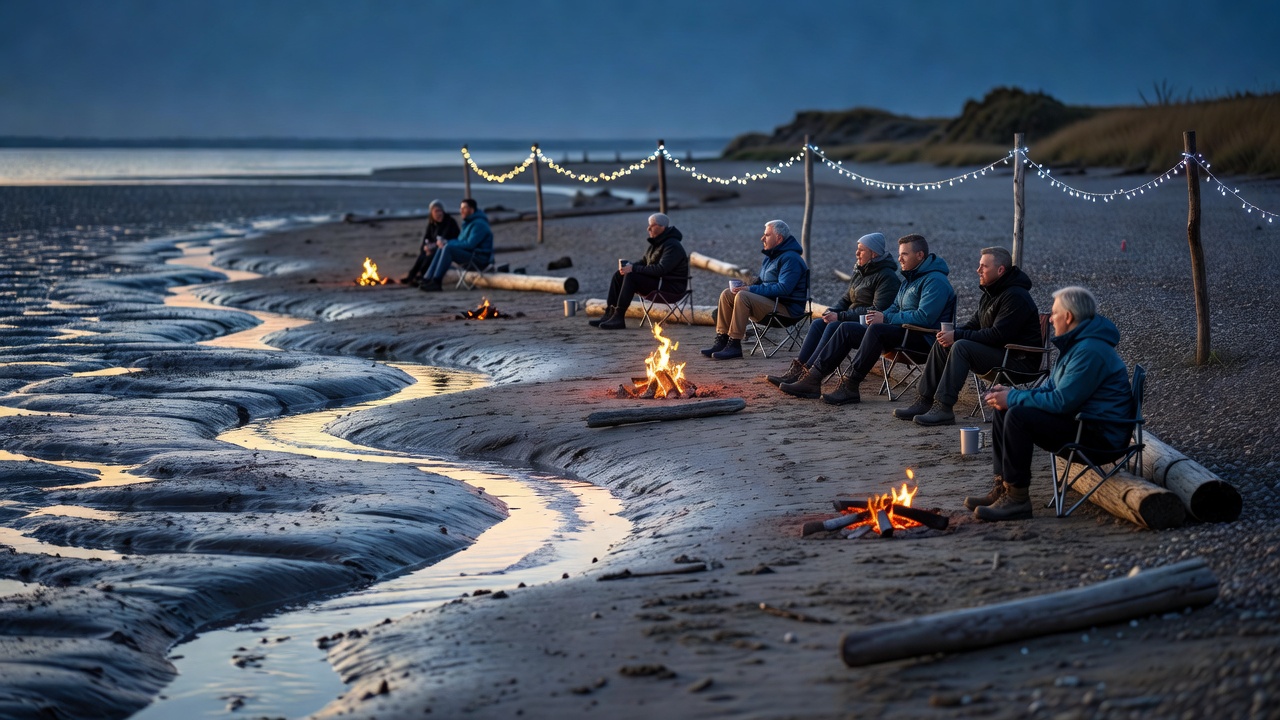
Logan Schmid · 3 October 2026
Exploring how tidal patterns shape informal evening gatherings along remote estuary edges
Tidal cycles in estuaries follow predictable rhythms driven by gravitational forces from the moon and sun, and these patterns determine when people can access certain shorelines for evening meetings. Estuaries experience mixed semidiurnal tides in many regions, where two high and two low tides occur each day with varying heights, creating windows of several hours when sandbars or pebble beaches become usable. Observers note that groups often time their arrivals around the turn of the tide to avoid being cut off by rising water, while the exposure of intertidal zones during ebb provides flat surfaces suitable for seating arrangements without permanent structures. Research from coastal monitoring programs shows that spring tides, which coincide with new and full moons, produce greater ranges between high and low water, expanding the usable area along remote estuary margins for several consecutive evenings. Neap tides, occurring during quarter moons, reduce that range and shorten the duration when lower ground remains dry enough for gatherings. Data collected along the Pacific Northwest coast indicates these variations shift the practical start time for evening activities by up to ninety minutes from one week to the next. Those who track local predictions adjust meeting schedules accordingly to maintain consistent durations regardless of lunar phase.Mechanics of estuary tides and access timing
Estuary channels funnel tidal flows through narrower passages than open coastlines, accelerating currents during both flood and ebb stages. This funneling effect means water levels change more rapidly near the mouth than farther upstream, so participants in gatherings along the edges learn to watch current speed rather than relying solely on predicted heights. Studies published by the National Oceanic and Atmospheric Administration document how wind can add or subtract several centimeters to expected levels, altering the exact moment when paths along the shore become passable or flooded again.
In October 2026, a perigean spring tide sequence will produce extended low-water periods in several mid-latitude estuaries, lengthening the interval when remote edges remain exposed after sunset. Groups planning multi-hour sessions can use these dates to extend activities without relocating as water returns. Tide tables available through government portals allow advance coordination across multiple sites, reducing last-minute changes caused by unexpected level shifts.
Patterns observed in different estuary systems
Along the tidal reaches of the Chesapeake Bay, informal gatherings cluster on bars that emerge only during the lower quarter of the tidal cycle, typically between 6 p.m. and 9 p.m. during autumn months. Participants move equipment and seating as the tide recedes, then retreat upslope before the flood begins. Similar behavior appears in Australian estuaries monitored by the Bureau of Meteorology, where daylight-saving adjustments shift the overlap between low tide and evening hours by roughly an hour each year.
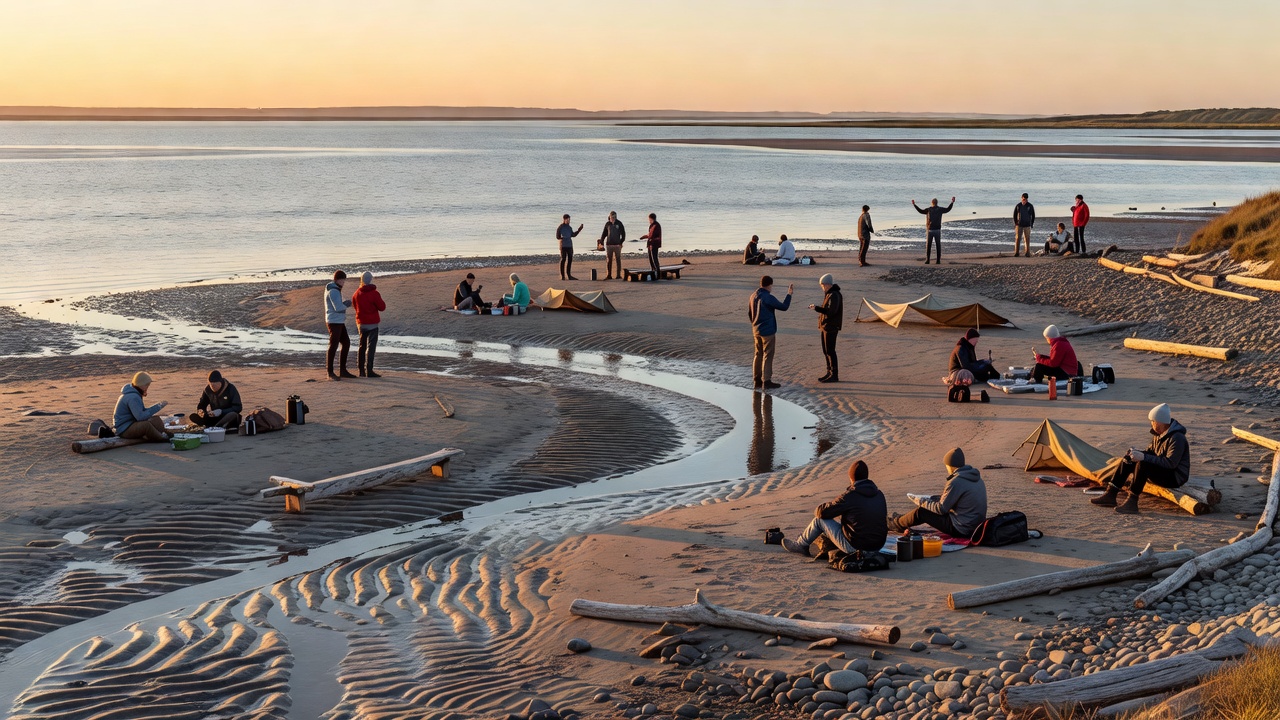
European estuaries such as the Severn display even larger ranges, sometimes exceeding ten meters, so the window for gatherings expands dramatically on spring tides yet contracts sharply during neaps. Local records compiled by port authorities show that evening use of certain banks occurs almost exclusively around the new-moon period when maximum exposure coincides with twilight. These variations create distinct seasonal calendars for different locations rather than a single universal pattern.
Safety and environmental considerations tied to tidal movement
Current speeds in estuary channels frequently exceed one knot during mid-tide, creating hazards for anyone lingering on isolated bars once water begins to rise. Research indicates that most informal gatherings conclude thirty to forty-five minutes before predicted high water to allow safe return along established routes. Wildlife responses also align with these cycles, as foraging birds vacate feeding flats when water depth reaches critical thresholds, prompting human groups to adjust their own timing to avoid overlapping with peak bird activity.
Long-term monitoring by Environment Canada demonstrates that temperature differences between river and ocean water masses can modify local tidal propagation, slightly advancing or delaying the arrival of the low-water slack in specific basins. Groups familiar with these micro-variations incorporate buffer periods into their evening plans, ensuring gatherings remain within the safe interval regardless of seasonal temperature swings.
Coordination methods used by recurring participants
People who meet regularly along the same estuary segments share tide charts and wind forecasts through simple messaging channels, allowing collective decisions about start times and locations. When a series of evening low tides falls on consecutive days, larger gatherings sometimes form because multiple small groups converge on the same exposed bar. Data from repeated observations reveal that these convergences happen most often during the two weeks centered on spring tides in months when sunset occurs after 7 p.m.
October 2026 offers one such sequence in northern hemisphere estuaries, where the alignment of lunar perigee with full moon extends usable low-water time into the early evening on four successive dates. Advance awareness of these dates permits groups to reserve preferred sites without conflict, since the physical space available grows measurably larger during peak tidal range.
Conclusion
Tidal patterns establish the physical boundaries and temporal windows within which informal evening gatherings occur along remote estuary edges. Predictable cycles of rise and fall, modified by lunar phase, wind, and local bathymetry, determine both accessibility and duration. Observers tracking these variables across multiple regions document consistent adjustments in timing and location that align with the twice-daily movement of water. In October 2026, extended low-water intervals will again illustrate how these natural rhythms continue to organize spontaneous assemblies without requiring permanent infrastructure or fixed schedules.